
Case Study / Business Automation
Invoice & Payment Automation
An automated invoice and payment workflow with an invoice generator, dynamic PDF receipt generation, payment-status tracking, and automated notifications. The workflow connects payment events to document generation and downstream business actions while maintaining structured records across connected systems.






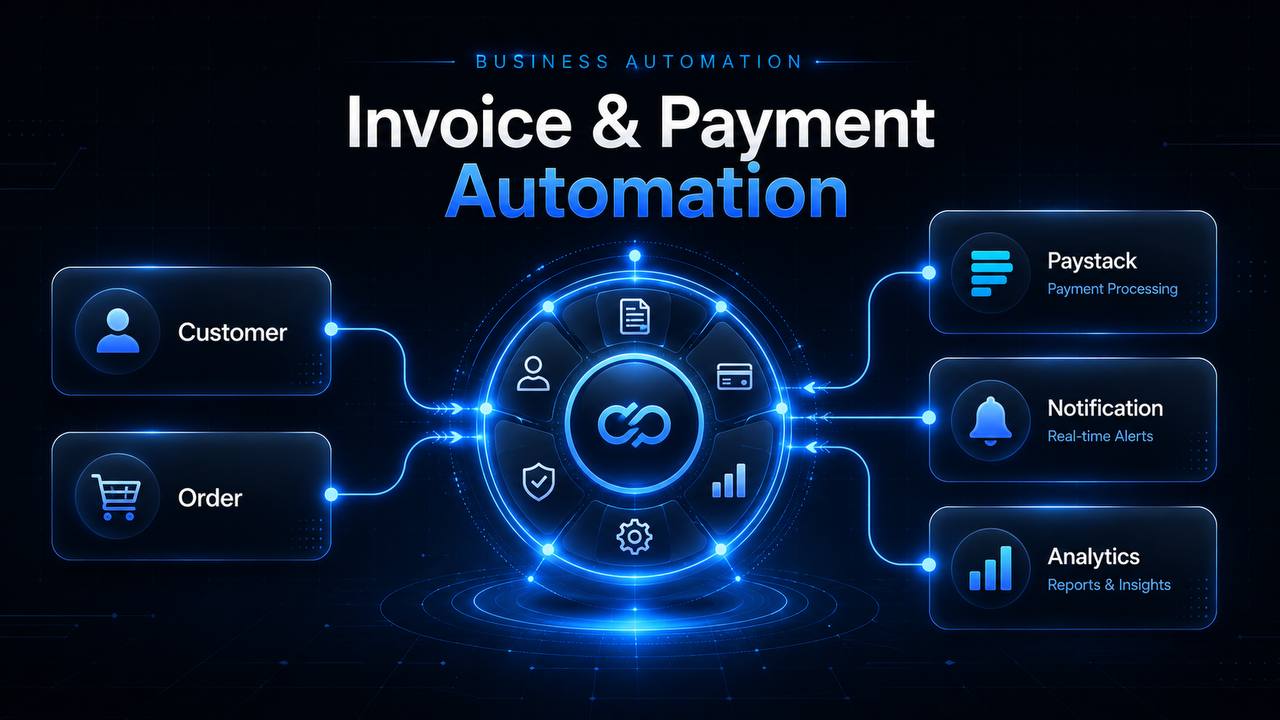
The Problem
Manual financial workflows created unnecessary operational overhead.
Invoice creation, payment verification, and customer communication relied heavily on manual processes, increasing delays, inconsistencies, and administrative effort as transaction volume grew.
Operational Challenge
- Invoices were generated manually for every transaction.
- Payment confirmation depended on repetitive manual verification.
- Customer payment updates were inconsistent and delayed.
- Finance teams spent valuable time updating operational records.
System Objectives
- Generate invoices automatically from business events.
- Verify payments through secure API integrations.
- Trigger customer notifications without manual intervention.
- Keep operational records synchronized across connected systems.
Design decisions that made the platform production-ready.
The automation separates invoice generation, payment verification, and downstream business actions into deterministic workflow stages, ensuring financial processes remain reliable, traceable, and easy to extend.
Automated Invoice Generation
Invoices are generated automatically from business events, eliminating repetitive manual document creation.
API-driven Payment Verification
Payment status is verified directly through Paystack APIs before any downstream workflow continues.
Event-based Notifications
Customers receive automatic updates whenever invoices are issued, payments are confirmed, or transaction states change.
Deterministic Business Logic
Workflow execution depends on verified payment events rather than AI assumptions, ensuring financial accuracy.
Financial Traceability
Every workflow step is logged and auditable, making invoice history and payment events easy to inspect.
Modular Workflow Design
Each automation stage operates independently, making integrations and future business processes simple to extend.
Workflow
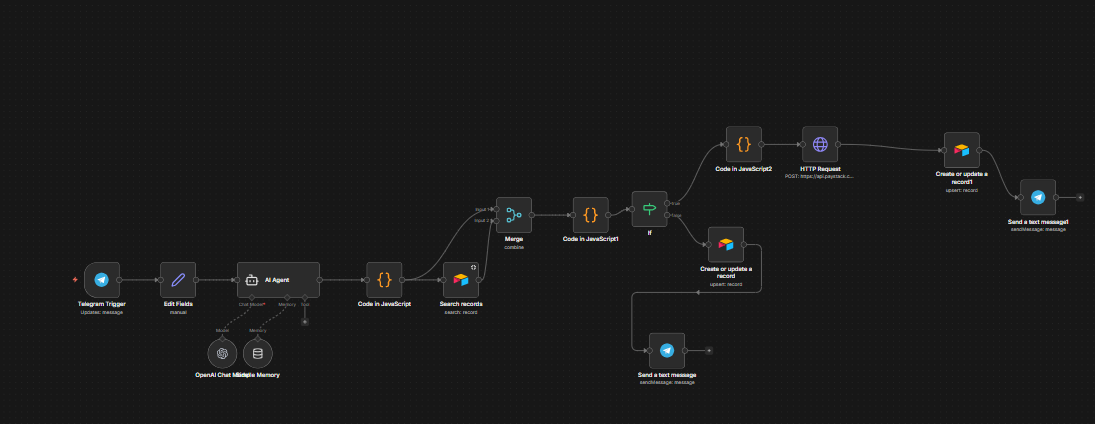
End-to-end invoice automation workflow.
Every invoice moves through a deterministic financial workflow. From generation to payment confirmation; ensuring accurate records, timely customer communication, and reliable downstream automation.
Invoice Generated
An invoice is automatically created whenever a qualifying business event or customer request is received.
Customer Notification
The customer receives the invoice immediately through the configured communication channel with payment instructions.
Payment Verification
The workflow continuously verifies payment status through Paystack APIs before any downstream process is executed.
Business Records Updated
Successful payments automatically update operational records, notify stakeholders, and trigger any required follow-up workflows.
The workflow combines automated document generation, payment verification, transaction state management, and follow-up logic into one traceable system. Each stage has a clear responsibility, so financial events can move from invoice creation to confirmed payment without relying on manual coordination.
Structured Invoice Generation
Customer and transaction data is assembled into a consistent invoice workflow, reducing manual preparation and keeping invoice records uniform.
PDF Document Generation
PDFMonkey generates customer-ready invoices containing key transaction details such as date, time, amount, and payment reference.
Payment Verification
Paystack payment data is checked before the workflow marks a transaction as paid or triggers actions that depend on confirmed payment.
Transaction State Management
Invoice and payment states are tracked through the workflow so pending, successful, failed, and incomplete transactions can follow the correct path.
Automated Follow-up Engine
Unpaid or incomplete transactions can trigger scheduled reminders and follow-ups, reducing the need for operators to track customers manually.
Payment Reference Traceability
Payment references connect invoice records to verified transactions, making it easier to trace payment status and reconcile individual customer payments.
What this project taught me.
Financial workflows require deterministic execution.
Business-critical processes such as invoicing and payment confirmation should always be driven by verified system events rather than assumptions.
Document generation is part of the workflow, not an afterthought.
Generating standardized PDFs automatically ensures consistency while removing repetitive manual work from finance operations.
Automation should reduce administration, not visibility.
Payment verification, transaction states, and customer notifications must remain traceable so operators always understand what the workflow is doing.
Well-designed workflows scale naturally.
Separating invoice creation, payment verification, follow-ups, and record updates into modular stages makes future integrations far easier to maintain.
Outcome
From manual finance administration to an automated payment pipeline.
The completed workflow demonstrates how modern automation can streamline financial operations without sacrificing control or traceability. Invoice generation, PDF creation, payment verification, customer communication, and business record updates operate as a single deterministic system, reducing repetitive administrative work while improving accuracy, consistency, and operational efficiency.